
If you’re here, you’re probably using Otterly AI, or you’ve tested it, and you’re not convinced it’s enough for serious AI visibility tracking.
That’s understandable.
Users praise Otterly AI for easy setup and intuitive dashboards, but they also call out a steep learning curve, cluttered UI, and difficulty turning visibility data into actionable steps for optimization.
And, those are not minor frustrations.
For teams serious about Generative Engine Optimization (GEO), monitoring alone isn’t enough. You need tools that tell you where you’re visible, why it’s happening, and what you can do next.
In this piece, I’m breaking down the top 7 Otterly AI alternatives that I’ve actually tested, tools that go beyond surface-level tracking and give you clearer signals, sharper comparisons, and a more practical way to compete inside AI-driven search.
Why Look for Otterly AI Alternatives?
Otterly AI works well if all you need is basic visibility into where your brand shows up in AI answers. Many users like its quick setup and simple dashboards.
But real user feedback points to a few recurring problems:
- The interface can feel cluttered and hard to navigate as tracking grows.
- It’s often unclear what to do with the data once you have it.
- Advanced setups and alerts take more time than expected.
- The value doesn’t always justify the higher price for teams doing GEO seriously.
When your goal is to actually improve how AI models talk about your brand, those gaps matter. That’s why many teams start looking for Otterly AI alternatives that offer clearer insight and more practical GEO workflows.
How I Evaluated These Otterly AI Alternatives
I didn’t put this list together by skimming landing pages.
I tested each tool on one question: Does it actually help me improve how AI models talk about my brand?
To answer that, I focused on three things:
- Prompt-level visibility: Can I see how my brand and competitors appear for the exact questions people ask AI?
- Model coverage: Does the tool track responses from ChatGPT, Gemini, Claude, and Perplexity, or just one engine?
- Actionability: Does the data tell me what to change, or does it just fill a dashboard?
The tools below made the cut because they give teams a real way to influence GEO performance, not just watch it.
The 7 Best Otterly AI Alternatives
- Rankshift: Best overall LLM tracking tool for GEO and AI visibility
- Profound: Best for enterprise-level AI search monitoring
- Scrunch: Best for brand safety and AI presence tracking
- Writesonic: Best for teams that want GEO plus content workflows
- Peec AI: Best for high-level AI visibility reporting
- Athena HQ: Best for data-driven GEO recommendations
- Ahrefs Brand Radar: Best for teams already in the Ahrefs ecosystem
Top 7 Otterly AI Alternatives at a Glance
| Tool Name | Best For | What Makes It Different | Starting Price |
| Rankshift | Prompt-level LLM tracking and GEO execution | Built specifically for tracking how AI models cite, compare, and recommend brands | Free trial → €49/mo |
| Profound | Enterprise AI search visibility | Heavy, multi-engine monitoring with large-scale reporting | Starts at $99/month |
| Scrunch AI | Brand and AI presence monitoring | Focus on brand safety and AI presence across regions and personas | ~$100/mo |
| Writesonic | GEO + content + AI traffic analytics | Combines LLM tracking with content creation and optimization | ~$199/mo |
| Peec AI | AI brand visibility and sentiment | Tracks mentions, position, and sentiment inside AI answers | €89+/mo |
| Athena HQ | AI recommendations and insights | Uses data models to suggest GEO actions | ~$295/mo |
| Ahrefs Brand Radar | Brand mentions in AI | Fast brand monitoring inside AI and web | ~$129/mo |
1. Rankshift – Best Otterly AI Alternative for Serious GEO Teams
When people tell me they’re moving on from Otterly, the reason is almost always the same.
They can see their brand in AI answers, but they don’t understand what’s driving that visibility or how to change it.
That’s the problem Rankshift was built to solve.
Rankshift tracks how models like ChatGPT, Gemini, Claude, Perplexity, Mistral, and Llama respond to real prompts about your brand and your competitors. Instead of abstract metrics, it shows the actual answers, the source models rely on, and the brands they choose to recommend.
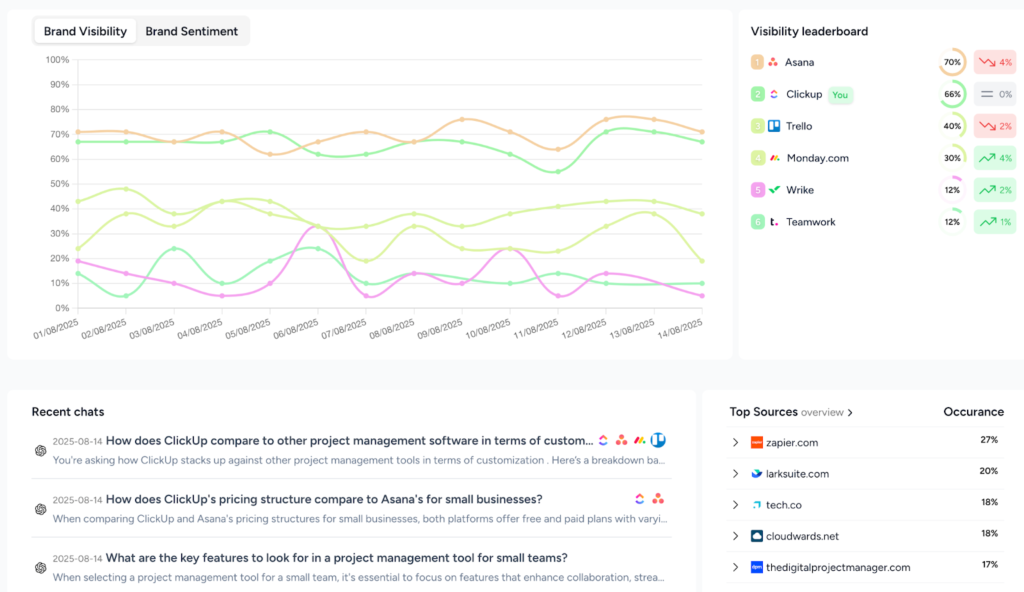
That’s the level of visibility GEO actually needs.
Key Features
- Multi-model tracking: See how your brand appears across ChatGPT, Gemini, Claude, Perplexity, Mistral, and Llama
- Prompt-level monitoring: Track the same questions across models and over time
- Competitor benchmarking: Compare how often competitors get cited in the same AI answers
- Source tracking: See which domains AI models rely on when answering questions about your category
- Actionable GEO insights: Identify where visibility drops and where to focus content and authority
- AI crawler analytics: See how AI bots actually interact with your site; which crawler visits, which pages it crawls the most, the issues like 404s or hallucinated URLs.
Pros
- Much deeper prompt-level insight than Otterly
- Clear competitor and source comparisons
- Designed specifically for GEO workflows
- Works for both agencies and in-house teams
- Unlimited projects and users
- Flexible prompt scheduling
Cons
- Requires you to be intentional about which prompts you track
- More data than basic dashboards, which can feel heavy at first
Why Rankshift works better than Otterly
Otterly tells you where you appear.
Rankshift shows you what’s driving that appearance.
When I use Rankshift, I don’t just look at mentions. I look at which prompts we’re losing, which competitors dominate those answers, and which sources AI trusts most. That’s what tells me what to publish, what to update, and where to build authority.
Pricing
Rankshift runs on a credit-based model with a 30-day free trial. Paid plans start at €49 per month with unlimited projects and users.
Verdict
When I’m choosing between Otterly and Rankshift, Rankshift wins because it doesn’t just show me visibility, it shows me what’s driving it. For teams that want to actually improve how AI models talk about their brand, it’s the strongest Otterly AI alternative right now.
Why not give it a shot and see?
2. Profound AI
Best For: Large brands and enterprise teams that need broad AI search visibility, reporting, and trend analysis across many markets and prompts.
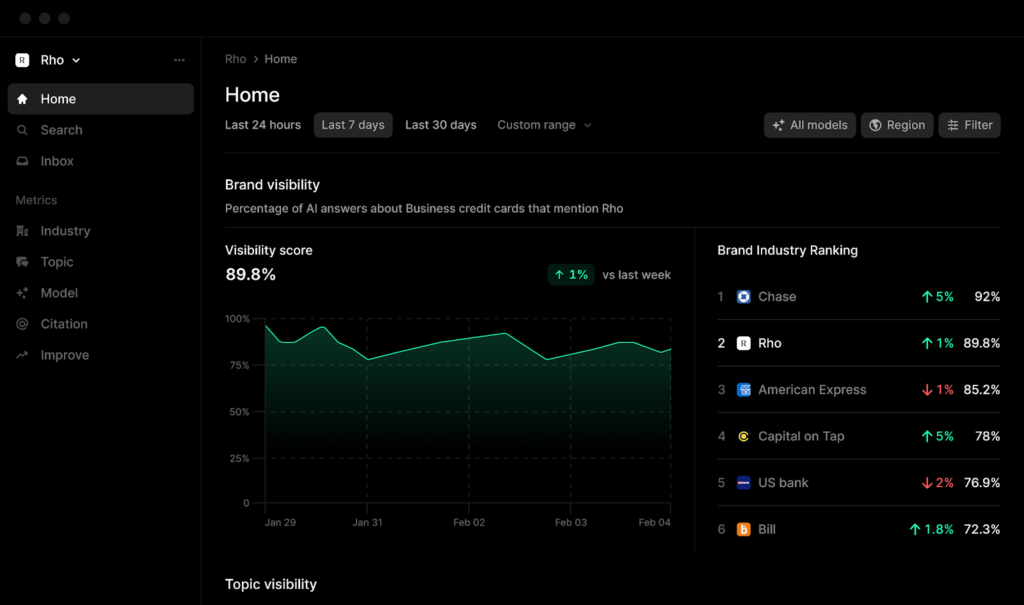
When I look at Profound as an Otterly AI alternative, what stands out is its breadth of AI coverage and reporting, especially for larger teams that need to monitor visibility at scale.
Profound doesn’t just show where your brand appears in generative search responses. It captures answers from multiple AI engines and surfaces which sources models rely on, how often your brand is referenced, and where competitors dominate the same queries. For organizations that need wide visibility and trend data, that depth can be useful.
But it also comes with trade-offs. There’s a recurring theme in G2 user feedback: Profound shows a lot of data, but teams often need extra time to decide what to act on. Insights are there, but the path from insight to action isn’t always obvious.
See what the teams say:

Another one…

But it’s important to note that these are not deal-breakers for every team, but they’re worth knowing when you’re weighing alternatives, especially if you want insights you can act on without lots of manual interpretation.
What Profound Is Strong At
- Tracking AI visibility across multiple answer engines
- Measuring share of voice, sentiment, and trends
- Showing which domains influence AI answers
- Surfacing real AI search demand through prompt volume data
- Connecting AI visibility with crawler and agent behavior
This makes Profound a solid monitoring and reporting layer.
Where Teams Feel the Friction
- The platform is data-heavy, especially for smaller teams
- Insights don’t always translate into clear next steps
- Prompt-level experimentation feels limited
- Cost and setup make it less flexible for fast iteration
Pricing
Profound uses tiered and custom pricing. A Starter plan has been introduced in the ~$99/month range, but it’s relatively limited, it supports tracking 50 prompts and is restricted to ChatGPT only. Even the Growth plan (~$399/month) supports 3 AI models and allows you to track 100 prompts.
Higher tiers expand coverage to more models and prompts, but pricing scales quickly as you add volume and engines. For teams that need broader model coverage or prompt scale, the cost can become significant compared to more flexible GEO tools like Rankshift.
Verdict
If I needed a wide, executive-level view of how AI search treats a brand, Profound would be on the shortlist. But when the goal is actually improving how AI models answer specific prompts, I find more focused platforms, like Rankshift, easier to use and faster to act on. 😉
3. Scrunch AI
Best for: Teams that want to understand how their brand shows up across AI search by persona, region, and use case, with a strong emphasis on brand safety and visibility reporting.
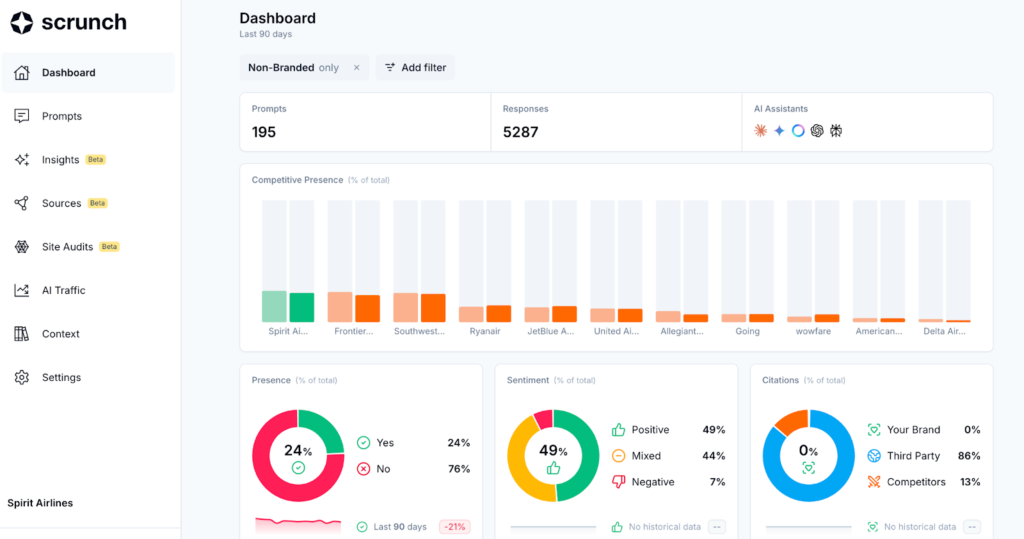
When I look at Scrunch AI as an Otterly AI alternative, the first thing that stands out is how deeply it frames brand presence in generative search. Scrunch helps you track where your brand shows up in AI answers, how it’s framed, and which sources get cited alongside it.
Scrunch AI is built around making sense of your brand’s narrative in a world where AI models increasingly shape discovery.
Its distinctive layer, the Agent Experience Platform (AXP), aims to go a step further by creating structured, AI-friendly versions of your content so that AI agents can consume and use it better when generating answers. That’s a unique angle in space.
That said, Scrunch’s strengths are squarely in monitoring and visibility reporting. It doesn’t provide the same execution workflows or prompt-level optimization guidance that some teams need to move from insight to improvement.
That focus on monitoring shows up clearly in user feedback as well.
Several teams echo this sentiment. Scrunch does a strong job surfacing brand visibility, but many users want more clarity on how to act on those insights, not just what the data shows.
What Scrunch Is Strong At
- AI presence monitoring across ChatGPT, Gemini, Perplexity, and Google AI experiences
- Prompt-level tracking with segmentation
- Citation & source mapping to see which pages influence answers
- Competitive benchmarking inside the same AI responses
- AXP (Agent Experience Platform) to understand how AI agents find and represent your brand
- Brand-safety signals to spot risky or inaccurate AI outputs
This makes Scrunch a solid brand visibility and risk-monitoring layer for AI search.
Where Teams Feel the Friction
- Data can feel heavy when you just want a quick answer
- Turning insights into actions isn’t always obvious
- Setup and configuration take time for large prompt libraries
- Pricing sits on the higher end for teams that mainly want GEO execution
Pricing
Scrunch uses tiered plans that typically start around ~$100/month, supporting ChatGPT only and 50 prompts. As you add more engines, prompts, and enterprise features like AXP, costs scale quickly, making it a pricier option compared to more flexible tools like Rankshift when you need broader coverage.
Verdict
Scrunch is very good at telling you how your brand appears across AI search; across regions, personas, and models. That’s genuinely useful. But when it comes to turning that visibility into GEO action, I still find it heavier than it needs to be. For teams that want to move quickly at the prompt level and actually change how AI systems respond, more execution-focused tools are easier to work with day to day.
4. Writesonic
Best For: Teams that want to combine AI visibility tracking with content creation and optimization inside one platform.
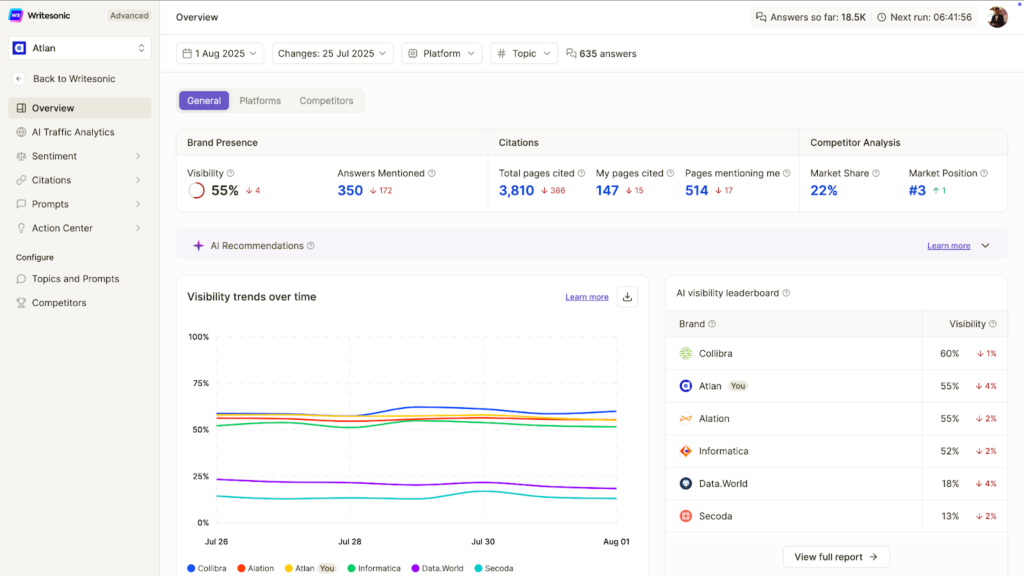
Next on the list of Otterly AI alternatives comes: Writesonic. The platform feels less like a pure tracking tool and more like a full GEO workflow.
Writesonic doesn’t just tell you whether your brand appears in AI answers; it connects that visibility data directly to content creation, optimization, and publishing.
It tracks how models like ChatGPT, Perplexity, Gemini, and others surface your brand, which prompts trigger your content, and where competitors show up instead. From there, it suggests what to write or update to improve how AI engines reference you. That makes it very different from Otterly AI, which focuses more on monitoring than on execution.
However, as per some reviews, there’s some inconsistency when it comes to data accuracy. Check this out:

This feedback isn’t isolated. Some teams find that Writesonic’s tracking can miss mentions or lag behind real AI responses, which reinforces that its core strength is execution workflows, not deep LLM tracking accuracy.
What Writesonic Is Strong At
- Tracking brand visibility across major AI search engines
- Prompt and query-level AI visibility insights
- Turning AI gaps into content and optimization recommendations
- Combining GEO, SEO, and content workflows in one platform
- Monitoring competitor presence inside AI answers
This makes Writesonic a GEO execution platform, not just a monitoring layer.
Where Teams Feel the Friction
- Visibility tracking isn’t as deep as dedicated LLM tools
- The platform can feel busy if you only want AI visibility
- Teams already using separate SEO or writing tools may see overlap
- More setup and learning than simpler trackers
Pricing
Writesonic offers tiered plans based on feature access and usage. GEO and AI visibility features typically sit in mid-to-higher-tier plans starting $199/month.
Verdict
When I think about Writesonic as an Otterly AI alternative, I see a platform built for teams that want visibility plus execution in one place. It’s a strong option if you plan to act on AI insights through content. But if you only need clean, focused LLM tracking, then maybe you should look for better options, maybe some easier to work with.
5. Peec AI
Best For: Teams that want a simple, accessible way to track AI visibility without enterprise complexity.
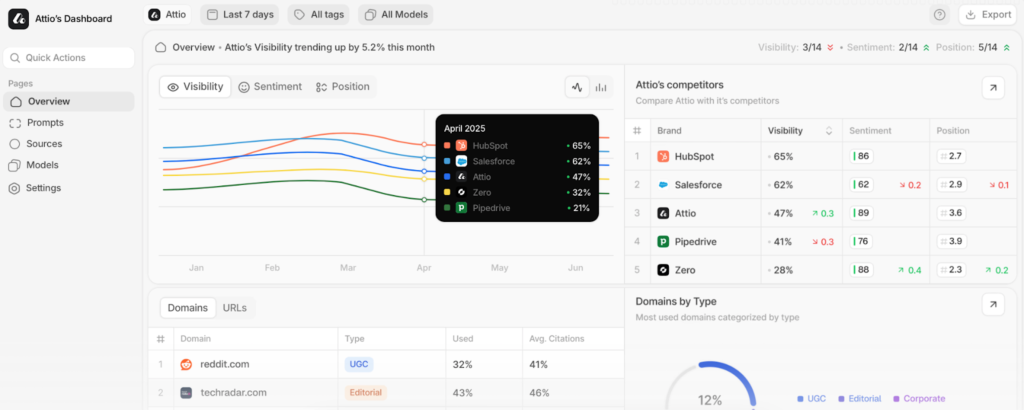
When I look at Peec AI as an Otterly AI alternative, it’s clear who it’s built for: teams that want fast answers to a simple question – does my brand show up in AI responses or not?
Peec AI focuses on helping teams see where their brand appears in AI-generated answers, which prompts trigger those mentions, and how they compare against competitors.
It tracks visibility across systems like ChatGPT, Perplexity, Gemini, and Google AI Overviews, and presents that data through clean, easy-to-read dashboards. The setup is straightforward, and you don’t need a long onboarding cycle to start seeing results.
That simplicity is Peec’s strength, and also its limitation.
Before getting into features, it’s worth noting a common pattern in user feedback: Peec is easy to use and quick to understand, but teams often outgrow it once they want deeper analysis or clearer guidance on what to change.
What Peec AI Is Strong At
- Tracking brand mentions across major AI answer engines
- Prompt-level visibility tied to real AI questions
- Basic competitor benchmarking
- Clean dashboards with low learning curve
- Fast setup and transparent pricing
This makes Peec a solid entry-level AI visibility tool.
Where Teams Feel the Friction
- Limited depth beyond surface-level visibility
- No strong guidance on how to act on insights
- Less useful for advanced GEO experimentation
- Not built for complex, multi-brand workflows
Pricing
Peec AI offers transparent, tiered pricing. Plans start around €89/month, with higher tiers for increased prompt volume and reporting features.
Verdict
If I wanted a quick, low-friction way to see whether a brand shows up in AI answers, Peec AI would be an easy choice. But once the goal shifts from seeing visibility to improving it, especially when looking for insight into how AI crawlers discover and access their content, the platform starts to feel shallow. For serious GEO work, Peec AI works best as a starting point, not a long-term solution.
6. AthenaHQ
Best For: Teams that want AI visibility tied directly to prioritization and execution, not just monitoring.
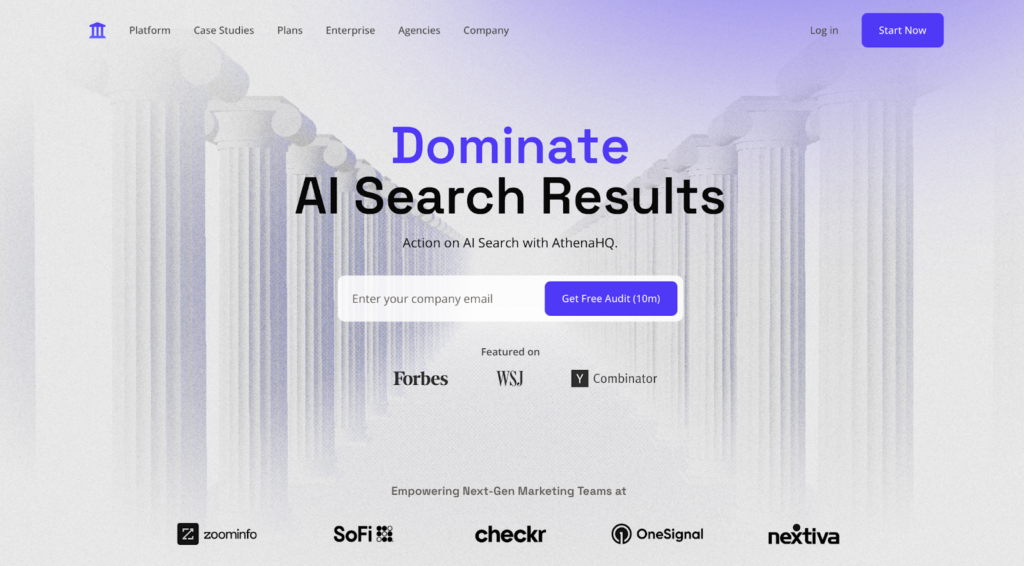
Athena HQ approaches AI visibility from a different angle. Instead of asking “Where do we appear?” it starts with “What should we work on next?”
Athena tracks how brands and competitors show up across AI answer engines like ChatGPT, Perplexity, Gemini, Claude, Copilot, and Google AI Overviews. It layers that visibility with prompt demand data and prioritization signals, so teams can focus on prompts and topics that actually matter for GEO.
That action-oriented approach is what separates Athena from more monitoring-first tools like Otterly.
User feedback often highlights Athena’s strong insights and direction, but also notes that the platform can feel dense at first. Teams appreciate the guidance, yet mention that onboarding and setup take time before everything clicks.
What Athena HQ Is Strong At
- Tracking AI visibility across multiple answer engines
- Prompt volume insights to understand real AI demand
- Competitor comparisons inside the same AI answers
- Prioritization and action workflows tied to visibility gaps
- Connecting visibility data to content and optimization decisions
This makes Athena more of a GEO execution platform than just an LLM tracking tool.
Where Teams Feel the Friction
- The platform can feel heavy if you only want visibility tracking
- Setup and onboarding take time due to feature depth
- Less flexible for quick, ad-hoc prompt experimentation
- Pricing and structure are geared toward mid-to-large teams
Pricing
Athena HQ offers a self-serve pricing plan at just $95/month. And for the enterprise plan, it’s custom and you need to get in touch with the team.
Verdict
If my priority were building a structured GEO program, with visibility feeding directly into prioritization. Athena HQ would be high on the list. It goes further than Otterly in pushing teams toward action. But if speed, flexibility, and lightweight prompt-level experimentation matter more, more focused tools tend to feel easier to work with day to day.
7. Ahrefs Brand Radar
Best For: Teams that want a broad, macro view of brand visibility across AI search and the web, especially if they already use Ahrefs.
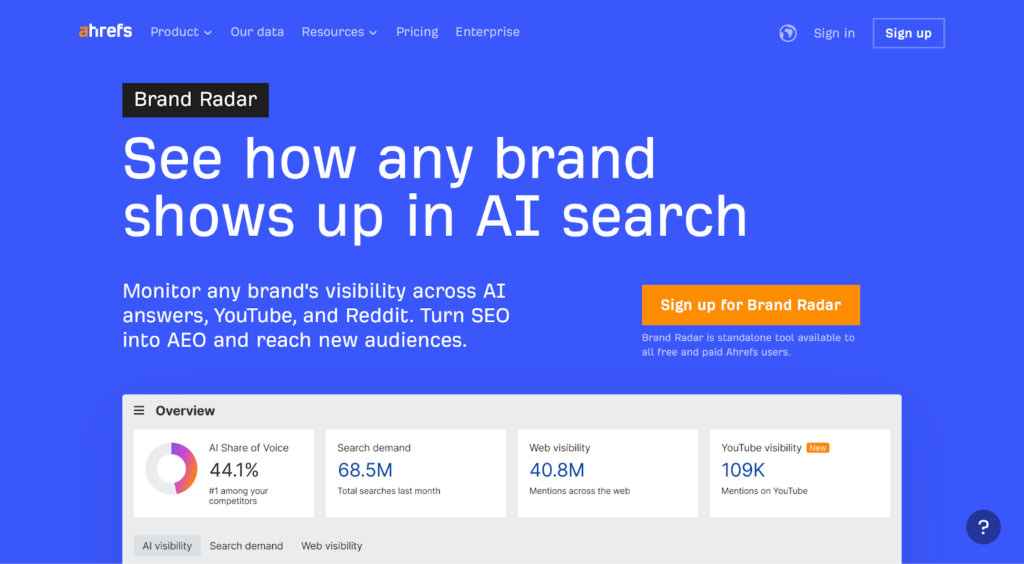
Ahrefs Brand Radar isn’t just another AI visibility tool, it’s built as part of a larger brand intelligence ecosystem that connects AI search presence with web visibility and search demand signals.
More than simply tracking whether your brand appears in AI answers, Brand Radar lets you understand how often, where, and in what context your brand gets mentioned across multiple AI systems and related discovery surfaces.
Unlike smaller trackers that focus on a handful of prompts, Brand Radar is powered by a massive database of 150M+ real, search-backed prompts across six major AI indexes, including Google AI Overviews, ChatGPT, Perplexity, Gemini, Copilot, and AI Mode.
This scale means brands can uncover visibility patterns and opportunities they likely wouldn’t see with a limited prompt set.
That breadth is compelling, but it also means Brand Radar works very differently than tools built for prompt-level optimization, and that’s important to understand if you’re weighing it as an Otterly AI alternative.
Users praise Brand Radar’s breadth and integration with traditional search signals, but there’s also feedback that it can feel too high-level for day-to-day generative search optimization and doesn’t always provide as much prompt precision as dedicated GEO trackers.
What Ahrefs Brand Radar Is Strong At
- Extensive AI visibility tracking across six major AI search indexes with a massive prompt dataset.
- Share of voice and competitive benchmarking at scale
- Connecting AI visibility with traditional search and web signals
- Zero setup; no prompt configuration required
- Useful category and topic-level visibility insights
This makes Brand Radar a strategic visibility and discovery tool, rather than a prompt-level GEO platform.
Where Teams Feel the Friction
- Not built for prompt-level GEO experimentation
- Harder to trace why a brand appears for a specific answer
- More useful for trends than for day-to-day optimization
- Too expensive as compared to the other GEO tools in the market
Pricing
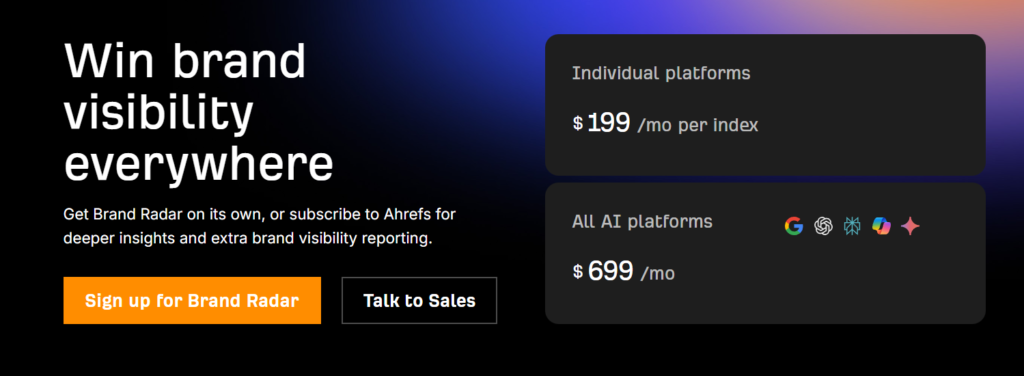
Ahrefs Brand Radar is priced on a per-index and per-site basis, which makes it expensive even at small scale. Individual AI platforms start at $199/month per index, and tracking all AI platforms costs $699/month for a single site.
For teams that want to monitor multiple brands, prompts, or models, costs add up quickly, especially compared to tools like Rankshift that offer broader coverage and prompt flexibility at a much affordable price.
Verdict
If I wanted a high-level view of how a brand shows up across AI-driven discovery, especially alongside traditional search, Ahrefs Brand Radar would make sense. But when the goal is understanding and improving visibility for specific AI prompts, it feels too removed from the actual answers. For GEO work that requires precision and iteration, more focused tools are easier to act on.
Switch to #1 Otterly AI Alternatives: Rankshift AI
What this comparison really shows is that not all Otterly AI alternatives solve the same problem.
Some tools focus on broad visibility and brand-level trends.
Others lean into reporting and executive dashboards. A few try to connect visibility with execution. None of that is wrong, but it does mean your choice depends on how seriously you want to work on GEO, not just monitor it.
If your goal is to understand AI search at a high level, several of these tools will get you there. But if your goal is to improve how AI models answer specific questions about your brand, you need visibility that’s precise, prompt-level, and easy to act on.
That’s the gap Rankshift is built to fill.
It keeps the focus narrow, what AI models actually say, who they cite, and where you’re being left out, so teams can move faster without wading through layers of reporting. For anyone treating Generative Engine Optimization as an execution discipline, that focus matters.
In a space that’s getting crowded very quickly, clarity is the real advantage.
Why not book a demo and see Rankshift in action?
